Category Archives: Self-Improvement

Navigating Multiple Identities: How to Cope and Thrive Without Losing Yourself

By: Marcelo L. Garcia and Esha Abrol

Most people have multiple identities and group memberships within which they find meaning. For example, it is not uncommon for someone to be a father/mother, a husband/wife, a brother/sister, an athlete, a musician and an engineer – all at the same time. Just to complicate things, that person might also belong to a specific cultural or religious group. In a world of constant flux, holding multiple identities can provide numerous benefits such as opportunities for personal growth, meaningful social interactions and economic mobility. But navigating multiple identities can be quite challenging at times, especially in cases of identity interference, i.e., where the pressures of one’s inherited identity suddenly start interfering with the development, performance, or expression of another equally legitimate newly formed identity.

In our view, the most challenging case of identity interference derives from one’s inherited cultural identity . Because culture tends to affect the way in which we play our multiple roles in society and is based on pre-determined group expectations, it is easy to feel trapped as we try to move forward in our life as individuals. More often than not, identity stakeholders – that is parents, siblings, friends, colleagues, teachers, and even spiritual leaders – will seek to have a disproportionate influence in our decision-making processes. For example, kids born in families where professional careers were valued may feel oppressed if they are naturally oriented towards the arts or entrepreneurship.

Identity stakeholders are entities with influencing roles in our lives, such as : parents, siblings, friends, colleagues, teachers, and even spiritual leaders.

In this article we’d like to put the spotlight on the children of those parents who decided to immigrate to another country in search of a better future. Those children – who were raised or born outside of their parents’ culture of origin – might sometimes feel out of place or profoundly conflicted when choosing their own path in life. The objective of this blog post is to share perspectives and provide tools that will help anyone dealing with cultural identity stakeholders to pursue the path to empowerment and the development of one’s personal identity.

In our view, the identity challenges that, we, first- and second-generation immigrants face on a daily basis are tremendously overlooked. Whether at work, in school, or in our social and personal life, we often feel torn between two or more cultural identities and extremely confused about the direction we should take in our lives. For example, where are we supposed to draw the line between personal autonomy (our own choices) and respect for the traditions, customs and paradigms inherited from our identity stakeholders? How do we tell our immigrant parents that we are not necessarily interested in becoming doctors, lawyers or engineers, but artists and entrepreneurs? How should we manage the possible backlash that might result when we start dating – or perhaps even decide to marry – someone outside our own culture of origin?

Trapped between our sense of loyalty and our inner desire to become the main architects of our lives, most of us often lack the tools and guidance to face those challenges with courage and composure. In some cases, we might feel entangled in false dichotomies (i.e., good v. bad, right v. wrong), perhaps suffocated by stakeholder-driven guilt, or simply confused. There is even a chance we might have felt the impulse to engage in self-destructive behaviours like delaying getting on with our r lives because we feel undecided about what is the “right path”. Some of us might have decided to reject our inherited cultural background altogether because we feel overly oppressed. Some of us might have even opted “to buy peace”  by  conforming – at least in public or in front of our parents – to a cultural paradigm or life style that is not fully ours.

To buy peace is a short-term solution to a conflict whereby person A does or does not something (whether voluntarily or involuntarily) in exchange of peace (not being pressured or bothered by person B). Buying peace, however, does not solve the underlying conflict.

Wordle

In our view, none of those behaviours are constructive in the long-run. They can soon become destructive for all the parties involved and create a lot of grief and in some cases fuel further conflict. We believe that the win-win solution lies on developing the tools to make our your own choices in life while preserving good relations with our your stakeholders, especially those with whom we you share close ties like our your parents and siblings. Over the long-run the idea is for you to develop the confidence to deal successfully with our your conflicting loyalties and multiple identities. We believe that being proactive in managing potential conflicts is the best solution for to building inner strength, self-confidence, and courage to make decisions for yourself and realize our your full potential. These are some tools we’d like to offer you:

1. Understand that rules are built on principles and focus the discussion on the principles: Don’t waste time debating the rules!

If your stakeholders are unwilling to support a certain path you want to pursue, whether it relates to your career, education or personal life, do your best to demonstrate that your path addresses somehow their overarching concern. The challenge will be to identify their concern, but once you do you will be in a better position to establish a constructive dialogue with them. For example, if your parents are preoccupied about your financial security (the principle), they might try to push for the idea that becoming a doctor or a lawyer are the only worthy pursuits for you (the rule). If that is the case, take the opportunity to show them that you have also considered financial security when choosing your career. Unless they are unreasonable, your parents probably just want to make sure that you are thinking about the importance of financial stability as you are making career choices for yourself and be creative. Do not argue with your identity stakeholders whether it is a good idea to drink water (the principle) – it is good for you and no one could argue against it!  Simply explain to them that you prefer drinking water out of a crystal glass (your decision) instead of a cup like they suggest.

2. Be proactive: Short-term bumps are better than long-term crises

Being proactive about informing your stakeholders about your life choices requires constant efforts and ultimately pays-off. For example, if you know that some decisions you are about to make are likely to create discomfort among your stakeholders, it’s always a good idea to prepare them well in advance by slowly initiating them to your new world view and sending them periodic hints that things are shifting on your side. The last thing you want to do is to shock them or challenge them. You want to come across as someone who is acting consciously and authentically. So make a plan on how your will inform them about your life choices (i.e., career, education, relationships, life style, etc.) and do so gradually, even if you know you will encounter some resistance at the beginning. Short-term bumps are better than full-fledged conflict.

3. Assert yourself at the outset: Be firm, yet avoid hostility

If you commit to being proactive in dealing with your stakeholder’s agenda or paradigm, you will inevitably find some resistance. Levels of resistance can range from manipulation, heated arguments, to direct threats. The best attitude to adopt when facing hostility is to remain calm. You do not want to succumb to your stakeholders’ hostility and respond with the same or even higher levels of hostility.

The assertion comes from informing your most influential stakeholders of your new life choice in a composed way and avoiding arguing with them. The goal is not to convince them that you are right or that they are wrong. Rather than getting into those types of “win-lose” arguments, stick to your guns and be respectful when you do so. Be firm and convey confidence without arrogance.

4. Set boundaries during the process: Do not accept unreasonable or unfair behaviour

Once you start managing the relationship with your stakeholders, you might encounter unreasonable or unfair behaviour. In such cases, it is important that you set boundaries. This is probably the hardest thing to do for those first- and second-generation immigrants that come from very traditional cultures where deference to family or their elders is an absolute value. It is not an easy shift. Your stakeholders have the right to disagree with your life choices. At the same time, your stakeholders are not perfect and sometimes they can be wrong, be unreasonable and unfair. If you are treated unfairly or unreasonably, tell them you will not accept that kind of treatment because you care about the health of your relationship with them. If they insist, distance yourself. It is extremely important that your stakeholders understand that you want to communicate in a civil and mature way. It will add to your credibility and improve your chances of success in the long-run.

5. Help your cause: Be thankful and loving

Be loving to your close stakeholders at all times, especially when you are in the process of being firm with them and setting boundaries. In the case of parents, some of them have difficulties letting go of their children. For some reason they think that we still belong to them when we become adults. Remind them how thankful you are for all the things they’ve done for you. Tell them you love them dearly. The idea is for you to develop a loving relationship with your parents and other stakeholders while asserting your autonomy and living your life fully.

“Your time is limited, so don’t waste it living someone else’s life. Don’t be trapped by dogma – which is living with the results of other people’s thinking. Don’t let the noise of others’ opinions drown out your own inner voice. And most important, have the courage to follow your heart and intuition.”
Steve Jobs

Disclaimer: The contents of this post are merely opinions of the authors intended to provide general guidance and provoke constructive discussion, and are not intended to provide or substitute professional advice.


About the authors: 

About Marcelo: Marcelo has spent much time in multicultural environments all across Canada over the past few years. Thanks to his continuous involvement in community initiatives and professional organizations, he has developed a first-hand understanding of the many inter-generational issues and cultural clashes that arise between immigrant parents and the younger generation of children raised or born in Canada. Marcelo’s cultural roots can be found in the narrower and longest strip of land in South America, and traced back to the lands of Al-Andalus, a province of the historical Caliphate of Cordoba. A few years after his parents decided to move to hedonistic Montreal, he became interested in China’s rise as a global superpower and decided to study political economy in Vancouver. He subsequently worked in corporate Toronto as a lawyer in the area of intellectual property law, and more recently he moved to Ottawa where he provides legal and economic advice on airline industry and business competition. He maintains a solid cross-fit training routine and likes to enjoy the curative powers of mineral waters and balneotherapy. He can be contacted at: marcelo.garcia.rosales(at)gmail.com


About Esha: Please see “About Esha” page.


Esha Abrol, Marcelo Garcia © January 2014

Measuring Intelligence: Who’s more intelligent?

A couple of nights ago, at a milonga (an Argentine tango event), I was telling a fellow tango dancer about my marketing company, he was fond of our “storytelling” approach and responded, “wow, you’re intelligent, what did you take in school?”
I asked him why that mattered. Is formal education really the ideal way to measure intelligence? In my opinion, the more appropriate measures would be: one’s ability to adapt, discipline, and appreciation for introspection and self-improvement. These are things I was not taught in class, in business school.

I explained to him, I may know more about marketing and business strategy, but he knows more about tango and he is a much better dancer than me. He responded, “That is because I’ve been dancing tango for 12 years, while you’ve only been dancing for one year. You’ll be as good or better than me in time.”

measuring-tape-1224085-m
Isn’t that how we all grow –  through investing time in learning? School provides a structured system in knowledge intake; however, tests and projects are not a way to assess one’s full knowledge and ability. What I did get from school was: learn more discipline, immediate credibility (versus proving my knowledge via action), and a network which I may or may not have been able to build otherwise.

We can’t learn everything, so we’ll always feel unintelligent on unfamiliar topics, like when I recently asked an architect whether he got to play with LEGO at work or when I asked a violin teacher with the difference between a quarter note and half note was, but all of us are experts at something, even if that’s a video game or black teas.

Reflection question: What in your opinion, what makes someone intelligent?

Esha Abrol © October 11, 2013

Creating Opportunities

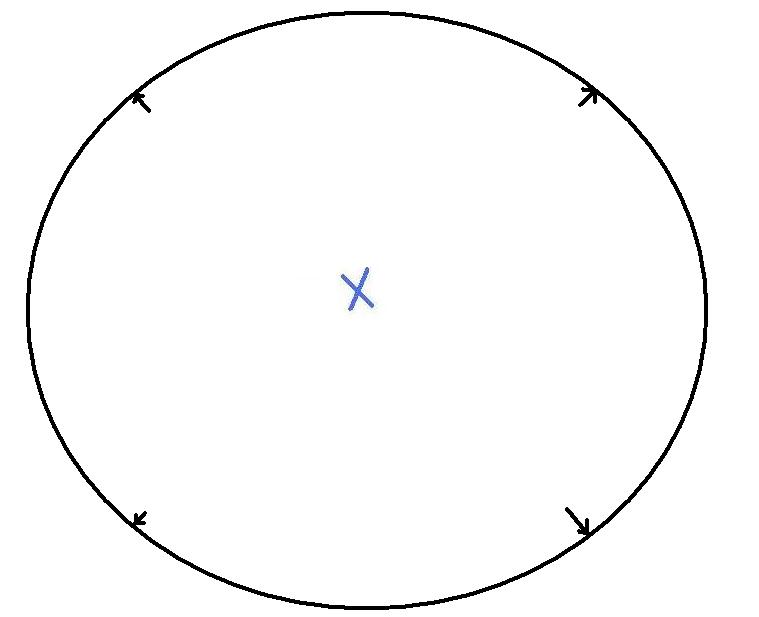
This post is meant to be a subtle reminder that self-limiting statements are simply rubbish. Let me explain how “the world is your oyster” through rejecting limitations. Please see the illustration below, let the blue “x” represent us. While the dome around the “x”, represents the limitations that we place on ourselves and allow others to place on us. In this post I’m going to explain what a “limitation” is through examples.

Limitations1

Imagine a world without this dome, then visualize the number of opportunities (represented by the white space) that lie before you, personal or as a business owner (this is unbelievably effective to keep in mind for sales calls/meetings). The good news is that this dome is formed of merely: ideas, thoughts, opinions, and perspectives – all of these can be altered. We intentionally keep this barrier around us to protect us from real and imagined or perceived threats. The goal should not to remove the dome, but to be aware of it to be able to weigh the actual risks from the fear of  discomfort, change, the unknown, or fear itself. Rejecting limiting beliefs and tackling new challenges bring new outcomes and perspectives, seemingly increasing the world’s opportunities. Allow me to elaborate with four personal stories as examples. Please read through them and reflect on how this dome affects your decisions and actions. Please share via e-mail, I would love to hear your stories. 

Example #1: Last summer a dear friend decided she would celebrate her birthday by signing a death waiver, strapping on a parachute, and jumping out of a plane. And, she asked her friends to join her. Just excellent. Before I knew it, I was just waiting around on a plane, waiting for it to reach the right altitude. We waited until we could release the plane door, be sucked-out into the atmosphere, pierce holes through the clouds to be able to touch the ground again. Ah, earth beneath my feet – that’s the way it should be!

So, was it really that bad? Not really, I would do it again. Jumping out of the plane does not feel frightening because my mind just couldn’t process what was happening – how often do we jump out of moving vehicles, particularly those 12,000 ft in the air? My mind just couldn’t register what was about to happen. However, prior to the jump I was uncomfortable, apprehensive, OK, and petrified. Hey, the anticipation of facing the unknown and the idea of conquering this daring adventure was a little unnerving. I also questioned my sanity: “What the heck is wrong with me… Why do I need to jump out of plane, again?!!!!!!!!”

Why was I scared? I was about to break out of the dome. The ideas, thoughts, opinions, and perspectives were scary. I kept repeating to myself and others, “I’m not the type of person who goes skydiving, I prefer calming and soothing activities, like yoga… I’m terrified of heights, I’d never be able to accomplish this, etc..” And I began to believe all of it. In reality, I actually knew very little about skydiving, but somehow I had already decided that it wasn’t for me. It was only something I had seen on TV, but never paid much attention to. So, let’s try to breakdown the fear:

The idea of jumping out of a plane- imagine it in your head? Humans don’t have wings (unless you drink Redbull). The visual of jumping out of a moving vehicle, from 12,000ft in the sky is scary because we’re supposed to feel earth beneath our feet. Because it is so scary-looking, the thoughts that run through my head are ones that validate the idea that this could kill me. Then, a friend asked me, “Esha, what if a bird pops your parachute? This is not for you!” My friends know exactly what to say to comfort me. Now, their opinions were based on their thoughts and ideas of skydiving because they had never actually done it themselves. They were perspectives.

I was terrified, but who wouldn’t be? As I drove to work that day, my eyes became a little moist as I said drove past a park where I played in my childhood – “I may never come back!” I thought. (This experience brought out a more sentimental and perhaps dramatic side in me)

It wasn’t easy to get myself on the plane, but once I was there, there was no turning back.

IMG_0174

I did it! You know, it was actually not that bad at all. I felt glad that I kept my commitment and followed through by rejecting the limitations.

The world now looked like this, I had given myself a little more space to explore:

limitations2

IMG_14831

Example #2: A few months later, as I walked into the gates of an amusement park with friends, voices in my mind repeated, “I hate rollercoasters. Rollercoasters are scary and dangerous. Stay away from the rollercoasters.” I’d heard many stories of accidents – belts failing, old equipment giving up, etc. My friends said to me, “Esha, if you can jump out of a plane, this should be easy, no?” So, I joined them and waited in line, for all three of the rollercoasters there. And, I survived them all.

Now, my world looked like this:

limitations3

Example #3: For years and years, I was told that India was not a safe place to travel alone, especially for females and,  that the food would make me ill. I really wanted to go; however, these images became fears in my mind – “I can’t go to India because I will become ill and possibly be kidnapped. I’m not the type of person who takes risks like this. I am content traveling somewhere more safe.”

Recently, I met someone sporting a bright-coloured suit and top hat at an event. In a more conservative city like Ottawa, he really stood out, I had to get to know him. Turns-out he was visiting from San Francisco. We immediately connected – his appreciation for creativity and doing things differently was obvious. We exchanged experiences, knowledge, and stories including this study he shared with me: A divider was placed in a fish tank, giving the fish access to only half of the tank. The fish would swim within the area that was available to it. After some time, the divider was removed. However, the fish remained in the same half of the tank that it was used to. It never crossed to the area where the divider once stood.

117_1686Upon an inspiring exchange of ideas and thoughts over tea with this extraordinary character, I went back to my office and booked my flight to India.  I departed in two weeks and returned alive, although with serious food poisoning I would be OK soon and my life had forever changed. India was absolutely magical – the people, the history, the art, the vibrant colours, and architecture – breath-taking.

My world now looked like this:

limitations4

Example #4: About a year ago, I was preparing to celebrate my third-anniversary working at a large company, the job I had started after university. For my age, I had become very “successful” as many old schoolmates, friends, professors, parents, and other family members would say. But, why didn’t I feel “successful”?

After school, I started applying for jobs because that’s what most people do after school. Originally, I only chose to study business to be better equipped to start my own business. I let myself forget that based on what I was seeing around me. The idea of applying for jobs and working with a stable income brought me more certainly and ease and it allowed me to “fit in”.

Three years at my job just flew by. As I was telling a special entrepreneurial friend about my upcoming anniversary, instead of congratulating me, he said, “Esha, just quit that stupid job already.” Forward and rude, but exactly what I needed, a reminder that I was letting limiting thoughts make my decisions, thoughts such as, “I am not as open to risk as I thought, I’m just not brave enough.” or “I have failed as a business owner before, I will fail again.” I finally quit my job (no 3-year anniversary cake for me) and this is what happened to the dome after I realized that my lungs would still have access to oxygen after I made this decision:

limitations5

We create a dome around us and allow others to ensure we keep it snug and air-tight. It acts as a barrier, blocking-off threats but also opportunities that may offer developments and improvements. These limitations are set based on excuses that we create to avoid discomfort that may challenge us. Of course challenges are not easy, people who encourage you to push yourself further are a key ingredient – I am thankful for the people who have been there to give me a little push when I needed it.

As we face new challenges, the domes around us continue to grow, allowing us to experience new things; however, the white space around it also seems to grow – how far do you want to go?

On a separate note, the next time I see you, remind me to tell you about the bandages on my hands in this picture:

IMG_0177

Cheers, Esha

Esha Abrol © September 2013

Good Distractions: The Dots in the Sky on the Way to the Gualeguaychú Carnival in Argentina

I was in Argentina, on my way to the Gualeguaychú Carnival with my dear friend, Ketevan. We managed to find the right bus and now heading to Gualeguaychú from Buenos Aires. It was around 11PM, as we were passing the country-side, I looked up from the window. The stars were beautiful, like I have never seen. Immediately I pulled out my iPhone to try to capture the beauty in a photo… this is how it turned out:

The breathe-taking view...?
The breathe-taking view…?

I took another one, same results.

The sky, clear of light pollution, twinkled. The shiniest stars were the ones that make up the constellation of Orion, the seven main stars were very bright. As I stared, a shooting star flew by.

The reason we pull-out our cameras to capture such moments? I would say, because these moments move us, capturing the visual may help us capture the emotions felt at the time and share with others too. What if the picture doesn’t turn-out, or you forgot your camera at home? How about observing each detail to be able to take a mental picture! So, I just stared… well, into space…

It looked like sparkles on a black blanket or fireflies stuck in the sky. There were millions of them. Each dot illuminated a radius of about an inch surrounding it. The visual of the contrast of  luminance to dark was what made it so capturing. The inconsistency of the amount of light and twinkle each star gave-off, gave the sky character and mystery, telling us that the limit is unknown and there is more than we can see with our eyes. Every time a car drove by, the lights from the headlights would hide the some stars, mostly the smaller ones, the ones farther away. Although they would be hiding, I knew they were there.

OK, so what’s my point? This is not just meant to be an attempt at poetry 🙂

While I’m staring into space and journaling, I am now realizing, we were not sure if we were even on the right bus or which stop to get off at. And, we could not communicate with anyone on the bus because of the language barrier. At this point, it was almost 1:00 A.M., the carnival was supposed to start around 12:00 A.M. I wasn’t worried though, counting the stars kept me calm, without me even realizing it. Similar to a tough yoga class, as attention to the breathe makes the poses more bare-able and keeps the mind from wandering. I was focused on something more positive.

I realized, I’ve never found undisturbed tranquility from the stars before. Perhaps if I was home in this same situation: uncertain of which bus I was on, with people who I couldn’t communicate with, and with no idea where I was in the middle of the night, my reactions may have been different.

While on vacation, the dots in the sky may be more clear and appreciable. Now, imagine being in such a state while working, brainstorming new ideas, and in our everyday lives.

Rather than just remembering the visual, I took note of the emotions evoked. How I felt: Inspired, happy, pensive, philosophical, curious, intrigued, and fortunate. OK, the nerdy side of me made me wish I had an encyclopedia on space with me, so I could look-up everything I saw. Feelings and thoughts were anything but stressed or worried. What good would such thoughts have done, anyway? What good do such negative thoughts ever have?

“Stress is nothing more than a socially acceptable form of mental illness.” – Richard Carlson

A  reflection question for you: Relating this experience to accomplishments, how would changing our perspectives based on the positives around us, better support us in achieving our goals?

By the way, we did make it to the Carnival; however, how we got there and returned back to Buenos Aires is a story I’ll tell you in person as I would need to use a lot of hand gestures and facial expressions.

Gualeguaychú Carnival, Feb 11, 2013

Esha Abrol © June 26, 2013

In this Story, the Brand Plays the Leading Role

KONICA MINOLTA DIGITAL CAMERA
Introducing Oscars for Brands…

Just a few weeks ago, for fun and in hopes of improving my presentation skills, I enrolled in acting classes.

I wanted to talk a bit about my first class. No different from any “first class”, we started with an introduction-round. We all shared our story, explaining what brought us in that room. There was a high-level of openness. With some corporate background, I’ve attended countless meetings and presentation. Comparing the emotions exhibited in class to a business meeting would be like comparing blowing your nose with Kleenex (the extra soft kind) vs. sandpaper. I realized that I’ve been quite unkind to my nose. Sorry, weird analogy, but I felt it created strong imagery (the reason for my apology).

After the intros, we got right into it. We were given a short dialogue. With a partner, we were given a minute to prepare a scenario, then rehearse the lines, act it out in-front of the camera, with the bright lights shining in our faces, the rest of the class crowded around the TV screen watching our every move, and the teachers providing very direct feedback, challenging us to show more emotions without over-acting.

Five words to describe the scenario? Un.com.fort.a.ble. We naturally resist everything involved in acting! Even with the butterflies in the stomach, it’s crucial to keep important details in mind, such as:

1) Connecting with your co-actors, demonstrating generosity by delivering your lines with full sincerity even if they are in the spotlight, allowing them to work with you to give their best performance

2) Working with the emotions you are feeling at the moment rather than pretending

3) Catch and toss: matching the emotions and tone of your co-actors

4) Avoiding our distracting quirks that we unconsciously do to “hide”, ex. tilting of head, raising eyebrows, forgetting to breath (apparently acting is 90% breathing). Afterall, we all go watch the flicks to see the awkward moments and uncomfortable emotions we are shy to emote in real life

5) The list goes on…

Although this was unfamiliar territory, I was able to find some comfort. As a marketing professional, I got to appreciate that branding and film-making were more alike than I had realized. Both should tell a story. Both should evoke emotions. In the case of acting, we are the product, we are the brand. Common elements in evoking emotions include: facial expressions, words, environment, gestures, tone of voice, and colours.


Sell your products with the Oscar in mind

Film-making means story-telling, expressing raw feeling, without hiding anything.

faces

Think about your own experiences with adverting as a consumer. Are there any commercials that you would actually watch rather than fast-forwarding through? Do you follow any company’s Facebook fan pages? Do you show preference over brands in the garbage bag aisle at the grocery store.

Odds are these brands are not just companies, but personalities. These personalities show us the value of their products and services through a truthful story. If we can relate to the story and personality, we will be moved in some way and build connection with this brand. With an established connection, we are more likely to pick their products over competitors when we are overwhelmed with options.

Marketing has come a long way, just over the past few years. Today, as consumers we are given a choice on whether or not we will engage in conversation with brands, we can share stories that move is in seconds, and we can better educate ourselves on products and services within minutes.

BrandsRole is an initiative that I founded with the hopes of helping companies of all sizes share their stories.  At BrandsRole we are always eager to seek and share inspiration through the power of story-telling.


Please contact me or see the BrandsRole website for more info: http://www.BrandsRole.ca

Let’s discuss.

Esha

-Esha Abrol, Director of Seeking and Sharing Inspiration, BrandsRole


BrandsRole © June 2013

Do you really make your own decisions?

A few days ago, I was chatting with a brilliant university student who is still exploring possible career paths (no different from most students). He asked me “which area of business do you think would be best for me?” This question triggered some reflection. I shared the story below and asked him to think about something we’re all guilty of, what I call: the decision-validation process.

Career decisions can be life-altering. Not to mention anxiety-causing. These important decisions often come with a tight deadline. Action is required.

A common action is to contact friends, contacts met at networking events, old co-workers, and family members. Upon telling them about the choices that lay before us in a particular situation, they may respond by sharing, “what they would do.” But do we already have some idea what they will say? The student I was talking to knew that I was extremely passionate about entrepreneurship. I’m quite sure he didn’t expect me to recommend a stable 9-5 job, where he is given set boundaries and limitations. When I suggested he consider starting his own business, his eyes lit-up.

Let me provide an example of the decision-validation process: While I was in university, I was offered a summer intern with the federal government. Everyone in my program wanted a summer intern with the government. It meant I would, most likely, be able to secure a government job upon graduation.

This placement was about a one-hour commute, I would have to be up at 4:30 A.M. to make it on time. (I was around 20-years-old – at that age, I wasn’t a morning person. 🙂 ) The pay was not great and the work itself didn’t seem all that exciting, so I wouldn’t be able to save much or gain much tacit knowledge.

My parents suggested I pass it up, but the interviewer, my potential future manager, was very persuasive – he said that if he was me, he would take this job.

I didn’t know what to do.

Dessert display in a cafe in Buenos Aires: decisions, decisions!
Dessert or no dessert? #ToughDecisions (Dessert display in a cafe in Buenos Aires)


I asked a friend for his opinion. I explained that I would have to be up at 4:30 A.M., then have to bus to the other end of the city and to do boring work for the next four months. I asked him what he would do. He was still in shock that a 4:30 in the morning existed. He said he would never do it. And he also said, “You knew what I would say.” He suggested I only asked him because I knew he wasn’t a morning person and that he would never even even consider such an offer. He was right. I obviously didn’t want the job or to secure a government job. I needed people to endorse me in my decision. I did end-up turning down the offer and never looked back or regretted it.

Being open to other’s perspectives and new opportunities is valuable, but ensuring the decisions made are yours, in the long run, will prove to be more rewarding and fulfilling. We often look to others to validate our opinions to make decisions. Why? Perhaps to avoid making mistakes by considering every single perspective, trusting others’ judgments more than our own, remove pressure from our own plates – it’s not as nerve-wrecking to make a decision for someone else. Making a decision can be stressful and difficult, but who knows your objectives, goals, strengths, weaknesses, and what you enjoy and find insufferable better than you?

Copyright © Esha Abrol. Canada. April 2013.

The path to bliss though entrepreneurship

This post was published on Kevetan’s blog, Because, for a guest post in January titled “The path to bliss though entrepreneurship”

You often hear “Be your own boss, create your own hours, do what you love” as reasons why the life of an entrepreneur is greater and therefore by definition happier than everyone else’s  I learnt that none of this is true after I relinquished my 9-5 life to fully commit to my start-up.  I quickly realized that quitting a job that doesn’t make you feel happy will not magically change things, nor will starting a business. The life of an entrepreneur is an emotional roller-coaster  quite the contrary to “the perfect life”. Let me draw you a quick picture; although you have no boss, there are always people to answer to, such as clients, media, parents, and most importantly yourself, who is more important than any boss.  While you do create your own hours, to be successful, one requires consistency in their schedule, discipline, and focus. Although you may choice not to work during the standard 9-5 hours, you will need to work as many, or more hours. Although you are doing what you love, starting a business is hard, and operating and developing one to grow is even tougher – your job responsibilities will include boring things like paperwork and data entry – it’s not always fun. The pressure to achieve results and the hectic lifestyle can make you forget that you are enjoying what you do. Doesn’t sound very blissful  does it?

If starting a business is not a highway to happiness and one has to endure various hurdles, why are most entrepreneurs so content? I believe that the path of entrepreneurship can result in contentment because of the opportunities it presents. First, you are given the freedom to channel your full potential. Second, your are forced adjust your mindset which leads to personal development because in order to be successful you must tackle things you are uncomfortable with. And lastly, entrepreneurship channels to self-discovery as well as the ability to prioritize and focus, which can further enrich your well-being.   Also, many entrepreneurs are content simply because entrepreneurship allows for a direct link between their passion and contribution to this world, and perhaps even inspires others! All of this is very much related, let me explain…

117_1787 (2)

Reaching your Full Potential: The Jigsaw Puzzle Analogy – Can I Paint and Re-size the Pieces?

When it comes to potential, being an entrepreneur requires being opportunistic, energetic and possibly a narcisstic leader simply because your chances of making it are much lower otherwise. If you posses characteristics entrepreneurship endows but you are not an entrepreneur  those qualities might never be used.  A corporate job is comparable to a one piece of a 100,000,000-piece ocean-scenery jigsaw puzzle, if you go missing, the Arctic Ocean will still look like a large body of water, with the world surrounding it. The scenery is beautiful and you may feel honoured to be a part of it, but you feel like you could represent at least 50 pieces of that puzzle and you would imagine re-sizing the pieces and perhaps even painting them a different colour. If you were to re-size and change the colour of the pieces, would you still fit in this puzzle? If so, how would the puzzle look? I’m sure you’d be advised not to alter the pieces in any way by those around you to avoid any risks of destroying the Arctic Ocean. Then again, you may have been able to add a multi-coloured arc over the sky, adding to the beauty.

This feeling, that you are wasting your time at your job, partly comes from hierarchies and pointless job titles, which imply that we can contribute, but only within limits. Limits and boundaries are set by “the boss”, job titles, and hierarchies. Basically, you feel guilt all the time, as if you are selling yourself short by being a part of a system that doesn’t challenge you enough to contribute all that you are actually capable of contributing. If you are not reaching your full potential and capability, you are also not reaching your full threshold of happiness.

Adjusting your Mindset

Entrepreneurial personalities are more likely to be type-A personalities from what I’ve seen, perhaps narcissistic too. Naturally, experiencing the rewards of successful endeavours is their favourite drug. The rewards are proof of our potential, what we are capable of, the endless opportunities in the world that we are all capable of realizing.

Despite their can-do attitudes, these optimists do have to overcome very many pressures. The pressures include greater risks and responsibilities, mainly the financial risks. Responsibilities not only include leading the business, staff, stakeholders, but most importantly, ourselves to ensure they remain motivated, focussed, healthy and happy. Over the past year, I have grown a much greater appreciation for personal development through analyzing our own perspectives and new ones and being open to adjusting my own mindset.

If one wants to remain an optimist after getting on the entrepreneurship roller-coaster, one must adjust ones mindset. Especially when it comes to handling the most difficult thing about being an entrepreneur;  Yes, failure.

Entrepreneurs, constantly face rejection in some way because the lifestyle is action-oriented. You’re constantly doing, you’re a hustler. It is difficult not to take the rejection personally. Just as the rewards and successes are extra special, the loses are as harsh, or worse. Through conversations with others and my own experiences, the rejection and set-backs can be devastating, discouraging, and depressing. However, with a change of mindset, it could be easier to view failures and “scary situations” as opportunities instead of “tough times”. Opening up to dealing with uncomfortable situations, like failures and facing your fears can open up doors, creating more opportunities. I believe realizing this has been one of the most valuable personal development opportunities in my life. Being able to deal better with failure and becoming more fearless has led me to cool things – like going skydiving, viewing the world from 12,000 ft off the ground to gain a new perspective on the world and my place in it. I would not have been able to lower my blood pressure levels, anxiety levels , and make great new friends through Argentine tango if I let the fear of possibly making a fool out of myself (I’d never danced in public before) hold me back. All the “scary” activities I may have engaged in over the past year allowed me to experiment with boundaries and helped me realize there are no limits. Once I discovered this, I was able to view the emotions that come with fear and failure as opportunities to improve myself.  Adjusting mindset and getting out of your comfort zone can be scary, but it is absolutely necessary if you are looking to increase your levels of exhilaration.

IMG_1483 (2)

Self-Discovery – An Inspiring Radiance

Entrepreneurship channels self-discovery because being an entrepreneur doesn’t make you a know-it-all. Often entrepreneurs are faced with trial and error, and discoveries along the way continuously change the path. Entrepreneurship is a never-ending journey that is practically impossible without epiphanies and self discovery.   Not everyone will book a ticket to India or go bungee jumping; it may be through literature, listening to Mixergy pod-casts, new experiences, through meaningful conversations with cool people, etc..

It is impossible to be the best at everything. Although this is obvious, we often try anyway, which can lead to anxiety and stress. Through discovering yourstrengths and passions, and what’s important to you, you can sort out and prioritize what matters to you, positioning yourself to develop meaningful goals then embark on a journey to achieve them. Not only will your idea better the world, but the sheet of radiance around you will bring inspiration to others.  Before racking your brain, trying to come-up with that Eureka moment, an idea that will change the world and make your neighbours happier, knowing what makes YOU happy first will allow you to develop goals that you can truly be proud of upon achieving them, which will allow you to create a sense of peace and ease for the mind, body and soul, allowing you to be healthy and do the best work possible.

In conclusion, realizing potential, adjusting mindset, and embarking on a journey of self-discovery are key ingredients that we need as humans, whether you are an entrepreneur or not. These three aspects contribute to self-actualization, contributing to happiness and fulfilment. As Maslow’s hierarchy of needs proposes, self-actualization can only be achieved once more basic human needs are mastered. How to reach this level will be unique for each individual; however, the results will be similar. Happiness and fulfilment are a common output that will results in higher quality of life, a life without depression, anxiety and stress. For me, this has been achieved though becoming an entrepreneur…

IMG_00191 (2)

________

About Esha:

As a young child I always knew I wanted to own my own business. However, upon graduation, when everyone around me started applying for 9-5 jobs, I thought it was something I was supposed to do too. So, I did the same and soon after started working a 9-5 job like everyone around me. The thought of doing something different, like starting my own business at a young age was scary and would make me very different from everyone around me. But I wasn’t happy, I felt like I was an actor in a terrible movie, that I was cheating myself of my potential. After three years of working very hard in corporate marketing, I finally became OK with the idea of being different and accepted the challenge of facing my fears of the unknown by quitting my job and fully committing to my start-up. Thus far, it’s been an adventure! If you’d like to chat more, I’m always down for chatting over tea, feel free to ping me. Cheers, Esha

Photos: Property of Esha Abrol 

8 Steps to Achieving Your Goals

Please kick me if you ever hear me say: “I’m too busy!”

The other day, I caught myself complaining about my schedule, which has been more full than usual lately. Instead if complaining and raising anxiety levels, I should have used my time crafting a better management plan for my time, removing waste and items with little ROI.

One of my biggest pet peeves is people telling me, “I’m too busy…”. I’ve always said, telling people (complaining about) how busy you are is a fantastic way to market yourself as a poor time manager. Why would you want to do that? And what exactly do you do with your time that blocks you from sparing 15 minutes of your time? I would hope that they actually mean that they are just not interested in the proposed project/request because they have other priorities and commitments.

When I meet new people and get asked that same exciting question; “where do you work?” (A question I very much despise – try replacing this with: “How do you spend most of your time?”), I usually respond: I don’t work, but this is how I spend my time…. Often people ask me how I’m able to get so much done. I wanted to share “my secrets”, which unfortunately aren’t actually secrets at all…

An e-mail exchange with a dear friend and fellow entrepreneur a couple of weeks ago got me thinking about the difference between staying focused and poor time management skills. I told this person that I would not be able to attend an upcoming networking event he invited me to because I was unable to draw the line between my business objectives and my time spent at the event. I told him that my main focus currently was: focus! He said he was concerned about my schedule being too busy. I explained to him my priorities based on my business objectives and he then was able to appreciate my declining the invitation. He appreciated how I respected my own time and others’ time and how this positions me better to reach my targets.

When I was a student, a mentor and I had a discussion on time management. He told me, “Esha, if you want something to get done, ask a busy person”. Honoring multiple commitments requires prioritizing, focus, and a strong grasp of your strengths and weaknesses. A busy person should have all of these mastered and knows how to get things done!

I recently was telling someone that I practice meditative activities daily. She said: “Wow, I wish I had the time to do that, you’re so lucky.” In reality, she chooses not to make time for meditation… she also implies I have all the time in the world, when in reality, she probably has more free-time than me. She wishes she had time to meditate, but doesn’t take action to make it happen. Perhaps she doesn’t need to, she doesn’t realize the benefits it could have in her life, or she’s just slothful. We have the ability to choose how we spend our time. We can make time for anything, if we really wanted to. But the moral of this story is: we need to align our high-level objectives with our actions. Currently my top two objectives are (without going into detail): business growth (sales) for my start-up and being happy. To help me achieve my objectives, some of tactics involve: measuring monetary ROI on all business events I attend, investing in personal health (meditation, diet, weird hobbies to diversify my interests, surround myself with good, like-minded people) to be in top-form for my business and happy/satisfied overall.


Let’s get started. Let’s look at how we can all start managing our time better to achieve anything we want.

#1  Make two columns on a piece of paper. List what you do on a daily basis in the first column, the activities that take up most of your time. In the second column, list the outcome (your return).

#2 Define your goals, short-term (something you want to achieve over the next two years), and long-term (2-10 years). When setting goals, be ambitious, keep your standards high, but be realistic. Most importantly, ensure that you goals are aligned with your objectives. Ask yourself, why do I want to achieve this? Will achieve x make me happy five years from now?

In my office, I have a reminder, nothing fancy:

If you don’t know what your goals are, how will you achieve them?

Goal: ____

N = _x_ ( x is the length of time you need to achieve your goal)

#3 Most people stop there. This has been one of my mistakes. When I was younger, I set many ambitious goals for myself, many would be impressed when I talked about them, this made me feel like I was on the right track. I thought that my life would magically follow some invisible path that would guide me to achieving my goals. I forgot to construct the path. I sometimes still fail at this, for example, as silly as this sounds, I have overlooked scheduling eating lunch in my schedule, which has adversely impacted productivity and overall happiness.

The path is your plan. Of course things won’t go perfectly as planned and it’s important to remain open to new opportunities. The HOW is the most important piece to this process, it’s the most challenging and a step that most people don’t think about. It’s especially important if you’re like me, I’m a typical entrepreneur – see opportunities everywhere and a creative mind. For those that work 9-5 jobs, it’s easy to get caught up in our day-to-day activities; we get stuck in a rut and don’t even realize it. I found the only way to get out of it was to quit my 9-5 job – it was too much of a distraction. Another challenge is, we may keep moving on from one thing to the next without getting much done.

Go back to the sheet of paper from step 1, list the tasks you should be doing to get to your goal – break-down the big stuff into small pieces. (Feel free to e-mail me for more info on this).

#4 Prioritize and set time commitments for each activity that will lead you to your goals. The amount of time we put into something does not necessarily reflect the outcome. The trick is to work smarter. Multi-tasking is not the answer; it’s actually been proven to be counter-productive. The first step in improving time management is looking into how we spend our time, and the outcome of our input. Then, re-organizing how we spend our time using a daily scheduling system that will allow you to evaluate the ROI on each commitment and a to-do list.

How to measure ROI? ROI or return on investment is the return from the time you invest. The return will be aligned with your goals and ultimately your objectives. It does not necessary have to be monetary return, it can be anything from “achieving a clear, calm mind”, “strengthening your relationship with your sister” – it depends on your objectives and goals. Go back to the piece of paper you’ve marked you goals down on and list the necessary outcomes of your activities. Then be able to evaluate on a scale of 1-10 the impact of each item – this will help you prioritize.

#5 Stay focused. This is not easy! Reaching new places requires you to develop new habits, which it can be as difficult as quitting smoking. It’s easy to modify your path, but you need to accept you will not fulfill your objectives without action and hard work. There are no other secrets other than discipline.

#6 Diversify your interests or more commonly recognized as keep a “work-life balance”. I would recommend participating in unique activities to keep a balance and diversify your interests and how you use your brain power. Time spent away from your goals can allow you develop new skills and perspectives to achieve more. For example, I recently picked up Argentine Tango, ballroom dance, photography, and horse-back riding – these activities involve me to wake-up a side of my brain that doesn’t get to be used as often in the office, meet new types of people, give me new perspectives, learn more about my own strengths and weaknesses, and keep stress/anxiety levels in control.

#7 Reflect. I know some people who journal every day. I set aside time at the beginning of the day, every day to reflect on the day before, be thankful for another opportunity to carpe diem and reflect on how I can make this day better. I also look at my productivity at the end of each week which dictates how I spend my week-ends (a busy week = relaxing, work-free week-end, a less busy week = a busy week-end!).

Take a step back, smell the roses!

#8 Update your plan. This step is based on your feelings during your reflection. this entire self-improvement exercise can offer many new opportunities. As a result, you’ll be able to better your plan and position yourself in a positive place surrounded by good things (as cheesy as that may sound) – at this point, it’s important to be open and adaptable. Being too rigid in following your plan can easily result in missing out on seeing opportunities presented to you. I find the biggest challenge finding the balance between focus and evaluating different opportunities that are presented to me on a daily basis. That’s what makes this so fascinating, this process requires constant experimenting and dedication to find the most healthy recipe for your mind and soul.

This may look overly comprehensive and a little overwhelming the first time you look at it, but these are just guidelines – develop your own list, one that works for you. Let me know how it goes!

Until next time, cheers, Esha

Copyright © Esha Abrol. Canada. November 2012